
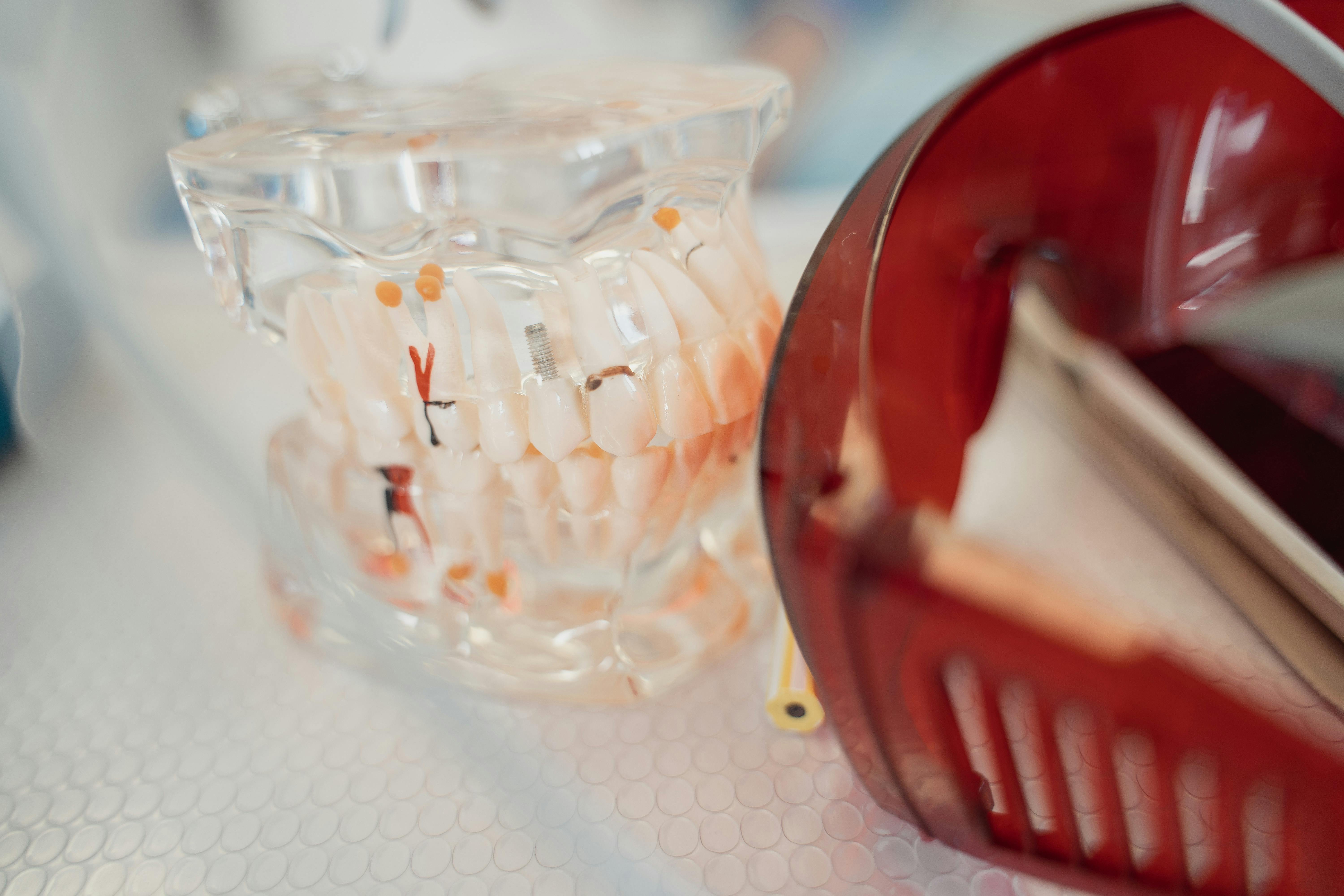
An implant does not stay in place because it was screwed in tightly. It stays because bone grows against it over the following months in a process called osseointegration.
The oxide layer does the work
Titanium reacts with air almost instantly, covering itself in a thin, stable oxide film. That film, rather than the metal beneath, is what living tissue actually contacts.
The body does not treat this oxide as a foreign object requiring encapsulation in scar tissue, which is the response most implanted materials provoke.
Instead, bone-forming cells settle onto it and lay down mineralised tissue directly against the surface, leaving no fibrous layer between the two.
Healing follows the pattern of a fracture
Preparing the site creates a controlled bone injury, and a blood clot forms in the microscopic gaps between the implant surface and the cut bone.
That clot is reorganised into woven bone, a rapidly formed and disorganised tissue that provides early support but limited strength.
Over the following months the woven bone is remodelled into denser lamellar bone aligned with the forces it carries, which is when the anchorage becomes reliable.
Movement during healing prevents the bond
If the implant shifts even slightly under load while the clot is organising, the tissue that forms in the gap becomes fibrous rather than bony.
Fibrous tissue never converts to bone, and an implant surrounded by it remains mobile permanently. This is the main mechanism behind early failure.
Initial stability at placement therefore matters greatly, and it is why healing periods and loading protocols are specified rather than left to convenience.
Heat and surface texture change the outcome
Bone cells are damaged by relatively modest temperature rises, so drilling is done in stages with irrigation to keep the site cool.
Overheated bone dies at the interface and must be resorbed before new bone can form, delaying or preventing integration in that zone.
Surface treatments that roughen the titanium at a microscopic scale increase the area available for bone contact and speed early attachment, which is why implant surfaces are textured rather than polished.
Integration is maintained, not permanent
Once formed, the bone-to-implant contact is continually remodelled like any other bone, responding to the loads placed on it through the crown above.
Inflammation from plaque around the implant, or forces the design was not intended to carry, can shift that balance toward bone loss.
Assessing whether an implant remains integrated requires clinical examination and imaging, and any change in feel, fit or comfort is a reason to be seen.