
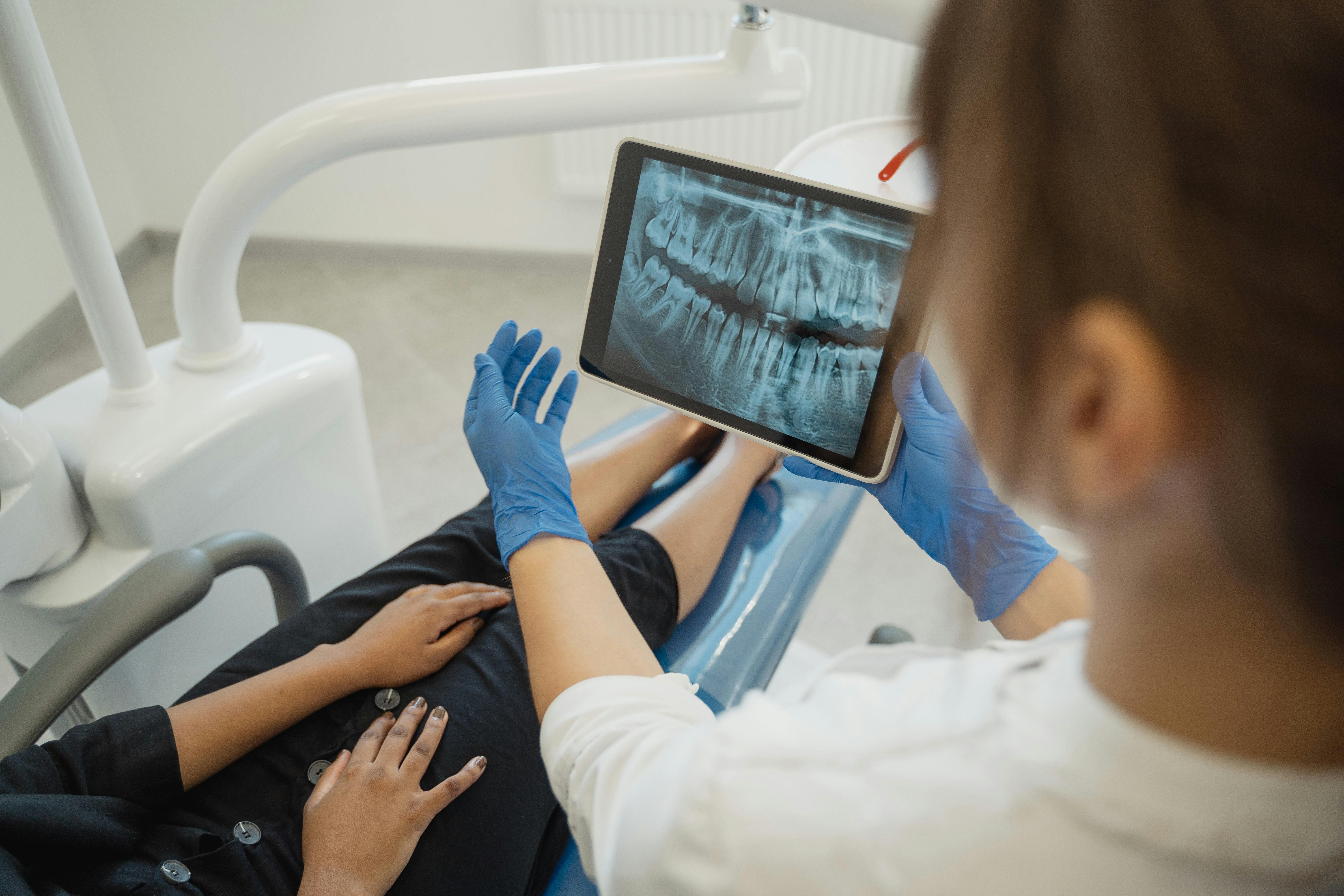
Discover how Artificial Intelligence (AI) is revolutionizing dental diagnostics, treatment planning, and practice management in 2026. This in-depth guide explores the top AI dental software solutions, offers expert insights, and compares the best platforms to boost your practice's efficiency, patient outcomes, and critical ROI. Learn how to invest wisely in the future of precision dentistry and secure your competitive edge.
Introduction to the Topic
Welcome to 2026, where the hum of advanced dental technology is no longer a futuristic dream, but the daily reality in leading practices worldwide. At the forefront of this transformation is Artificial Intelligence (AI), a game-changer poised to redefine every facet of dentistry. From the moment a patient steps into your clinic to the intricate details of treatment planning and practice operations, AI is enhancing accuracy, boosting efficiency, and profoundly improving patient care.
For decades, dentists have relied on their expertise, honed through years of rigorous training and experience. While human intuition remains invaluable, AI provides a powerful co-pilot, sifting through vast datasets, identifying nuanced patterns, and offering insights that even the most seasoned practitioner might overlook. This isn't about replacing the dentist; it's about empowering them with a 'superpower' – the ability to see more, plan better, and achieve superior clinical and financial outcomes. If you're looking to elevate your practice, optimize your investment in dental technology, and ensure maximum ROI, understanding and integrating AI solutions is no longer optional – it's essential.
Backgrounds & Facts
The journey of AI in dentistry began with specialized algorithms performing specific tasks, like analyzing X-rays for caries detection. Today, in 2026, AI has matured into sophisticated platforms offering comprehensive solutions across multiple disciplines. The global dental AI market, valued at over $200 million in 2023, is projected to surge past $1 billion by 2030, reflecting an exponential adoption rate among forward-thinking practitioners. This rapid growth is driven by several key factors:
- Enhanced Diagnostic Accuracy: AI algorithms can analyze radiographic images (2D and 3D) with unparalleled precision, often detecting early signs of pathology, bone loss, or caries that might be subtle to the human eye. This leads to earlier intervention and better prognoses.
- Streamlined Treatment Planning: From orthodontics to implantology, AI can simulate various treatment scenarios, predict outcomes, and optimize treatment paths, reducing chair time and improving predictability. Orthodontic AI, for instance, can analyze malocclusions and propose optimal clear aligner sequences in minutes.
- Operational Efficiency: Beyond the clinical realm, AI is transforming practice management. Predictive analytics can optimize scheduling, minimize no-shows, automate insurance claim processing, and even personalize patient communication, freeing up valuable staff time and reducing administrative burdens.
- Patient Engagement & Education: AI-powered tools can create personalized treatment visuals and explanations, helping patients understand their conditions and proposed treatments more effectively, leading to higher acceptance rates.
- Risk Mitigation & Compliance: AI can assist in identifying potential risks, ensuring treatment plans align with best practices, and flagging compliance issues, thereby reducing liability and improving overall practice standards.
The integration of AI with other digital dentistry tools – intraoral scanners, CAD/CAM systems, and 3D printers – creates a seamless, end-to-end digital workflow. This holistic approach is what defines the cutting edge of dental practice in 2026.
Expert Opinion / Analysis
“The advent of AI is the most significant technological leap in dentistry since the digital X-ray,” states Dr. Anya Sharma, a leading Dental AI Consultant and founder of 'Precision Dental Innovations'. “In 2026, practices that have embraced AI are already seeing a dramatic competitive advantage. We’re talking about a 20-30% increase in diagnostic accuracy, a 15-25% reduction in treatment planning time, and a tangible boost in patient satisfaction.”
Dr. Sharma emphasizes the financial implications: “For dentists, the ROI on AI integration is compelling. Early and accurate diagnoses reduce the need for extensive, costly treatments later. Optimized treatment plans lead to fewer re-dos and higher case acceptance. And the operational efficiencies translate directly into reduced overheads and increased profitability. We've seen practices achieve ROI within 12-18 months, primarily through increased patient volume, higher value treatments, and reduced administrative costs.”
However, Dr. Sharma also cautions against a 'one-size-fits-all' approach. “The initial investment can be significant, and the learning curve, while manageable, requires dedication. Data privacy and ethical considerations are paramount. Practices must choose AI solutions that integrate seamlessly with their existing infrastructure and provide robust data security. Training staff and ensuring patient trust are also critical components of successful implementation.” She advises dentists to look for AI platforms that offer strong support, continuous updates, and clear pathways for data integration and compliance.
💰 Best Options in Comparison (VERY IMPORTANT)
As the AI dental landscape matures, several platforms have emerged as leaders, each specializing in different aspects of practice enhancement. Here’s a comparison of some of the top AI dental software solutions available to practitioners in 2026, designed to help you make an informed investment decision:
-
DiagnostiX Pro (AI-Powered Diagnostic & Image Analysis)
Overview: DiagnostiX Pro is a comprehensive AI platform focused on revolutionizing radiographic analysis. It leverages advanced machine learning to meticulously analyze 2D intraoral, panoramic, and 3D CBCT images. Its primary strength lies in early and accurate detection of dental pathologies, often surpassing human capabilities in identifying subtle changes.
Key Features: Automated caries detection (even incipient lesions), periodontal bone loss measurement, periapical lesion identification, pathology screening (cysts, tumors), implant site analysis, and comprehensive reporting. It provides actionable insights with color-coded overlays directly on images.
Ideal For: General practitioners, periodontists, endodontists, and oral surgeons seeking to elevate diagnostic precision, improve case documentation, and enhance patient education through visual aids.
-
OrthoPlan AI (Intelligent Orthodontic Treatment Planning)
Overview: OrthoPlan AI is a specialized solution designed for orthodontic practices, transforming the way clear aligner and traditional brace treatments are planned and executed. It uses AI to analyze patient scans, predict tooth movement, and optimize treatment sequences for faster, more predictable outcomes.
Key Features: Automated malocclusion analysis, virtual treatment simulations, optimal aligner staging, predictive outcome visualizations, custom appliance design suggestions, and integration with leading clear aligner manufacturers. It significantly reduces manual planning time.
Ideal For: Orthodontists and general dentists offering orthodontic services (especially clear aligners) who want to streamline planning, improve treatment predictability, and enhance patient acceptance with compelling visual simulations.
-
PraxisGenius AI (Integrated Practice Management & Operations)
Overview: PraxisGenius AI moves beyond clinical applications, focusing on optimizing the business side of dentistry. It integrates with existing practice management systems to automate administrative tasks, improve patient flow, and boost overall operational efficiency and profitability.
Key Features: AI-driven scheduling optimization (reducing no-shows), automated personalized patient recall & communication, predictive analytics for inventory management, streamlined insurance claim processing & error reduction, and revenue cycle management insights. It learns from practice data to constantly improve efficiency.
Ideal For: Any dental practice owner or manager looking to maximize operational efficiency, reduce administrative overhead, improve patient retention, and boost the overall financial health of their practice.
To help you decide which AI solution best fits your practice's needs, here's a comparative table:
| Feature/Platform | DiagnostiX Pro | OrthoPlan AI | PraxisGenius AI |
|---|---|---|---|
| Primary Focus | Radiographic Diagnostics & Pathology Detection | Orthodontic Treatment Planning & Simulation | Practice Management & Operational Efficiency |
| Key Benefit | Unparalleled diagnostic accuracy & early detection | Streamlined planning, predictable outcomes, reduced chair time | Automated admin tasks, optimized scheduling, increased revenue |
| Target User | General Dentists, Specialists (Perio, Endo, OS) | Orthodontists, GPs offering clear aligners | Practice Owners, Office Managers |
| Estimated Investment (Annual Subscription) | $5,000 - $15,000+ (Tier-based) | $7,000 - $20,000+ (Case volume based) | $4,000 - $12,000+ (Practice size based) |
| ROI Potential | High (Increased case acceptance, early intervention savings) | Very High (Efficiency, faster case completion, patient satisfaction) | High (Reduced overhead, improved patient retention, revenue growth) |
| Integration Capabilities | PMS, DICOM viewers, intraoral scanners | PMS, intraoral scanners, 3D printers, aligner labs | All major PMS, EHR, communication platforms |
| Learning Curve | Moderate (Interpretation of AI insights) | Moderate (Adapting to AI-driven planning) | Low-Moderate (System setup & automation rules) |
Outlook & Trends
The trajectory of AI in dentistry is steep and exciting. Looking beyond 2026, we anticipate several groundbreaking trends:
- Hyper-Personalized Dentistry: AI will move towards creating highly individualized treatment plans based on a patient's genetic profile, lifestyle data, and even microbiome analysis, leading to truly bespoke dental care.
- Predictive Health Monitoring: Smart dental implants and intraoral sensors, powered by AI, will continuously monitor oral health, detecting issues like inflammation or implant failure long before symptoms manifest, allowing for proactive intervention.
- AI-Enhanced Teledentistry: Remote AI diagnostics will become more sophisticated, allowing patients to submit high-resolution scans or videos for AI-powered preliminary assessments, further expanding access to care.
- Augmented Reality (AR) & Virtual Reality (VR) Integration: AI will merge with AR/VR for enhanced surgical guidance, patient education, and even virtual training for dental students, creating immersive and highly effective learning environments.
- Bioprinting & Regenerative Dentistry: While still in early stages, AI will play a critical role in the design and execution of bioprinted dental tissues and organs, pushing the boundaries of regenerative dentistry.
Ethical AI development and robust data security will remain paramount. The industry will increasingly focus on transparent AI models, ensuring dentists understand the 'why' behind AI recommendations and maintain ultimate clinical oversight.
Conclusion
The year 2026 marks a pivotal moment for dental practices worldwide. Artificial Intelligence is no longer a niche technology but a foundational element for any practice aiming for peak performance, superior patient outcomes, and unparalleled profitability. Investing in AI-driven solutions is a strategic move that future-proofs your practice, enhances your diagnostic capabilities, streamlines your operations, and ultimately delivers a significant return on investment.
Embrace the AI revolution. Explore the options, understand their potential, and integrate the tools that will empower you to deliver precision dentistry like never before. The future of your practice, and the smiles of your patients, depend on it. Don't be left behind – become a pioneer in the era of intelligent dentistry. Visit myadvanceddentist.com for exclusive insights and partnerships to guide your AI adoption journey.