
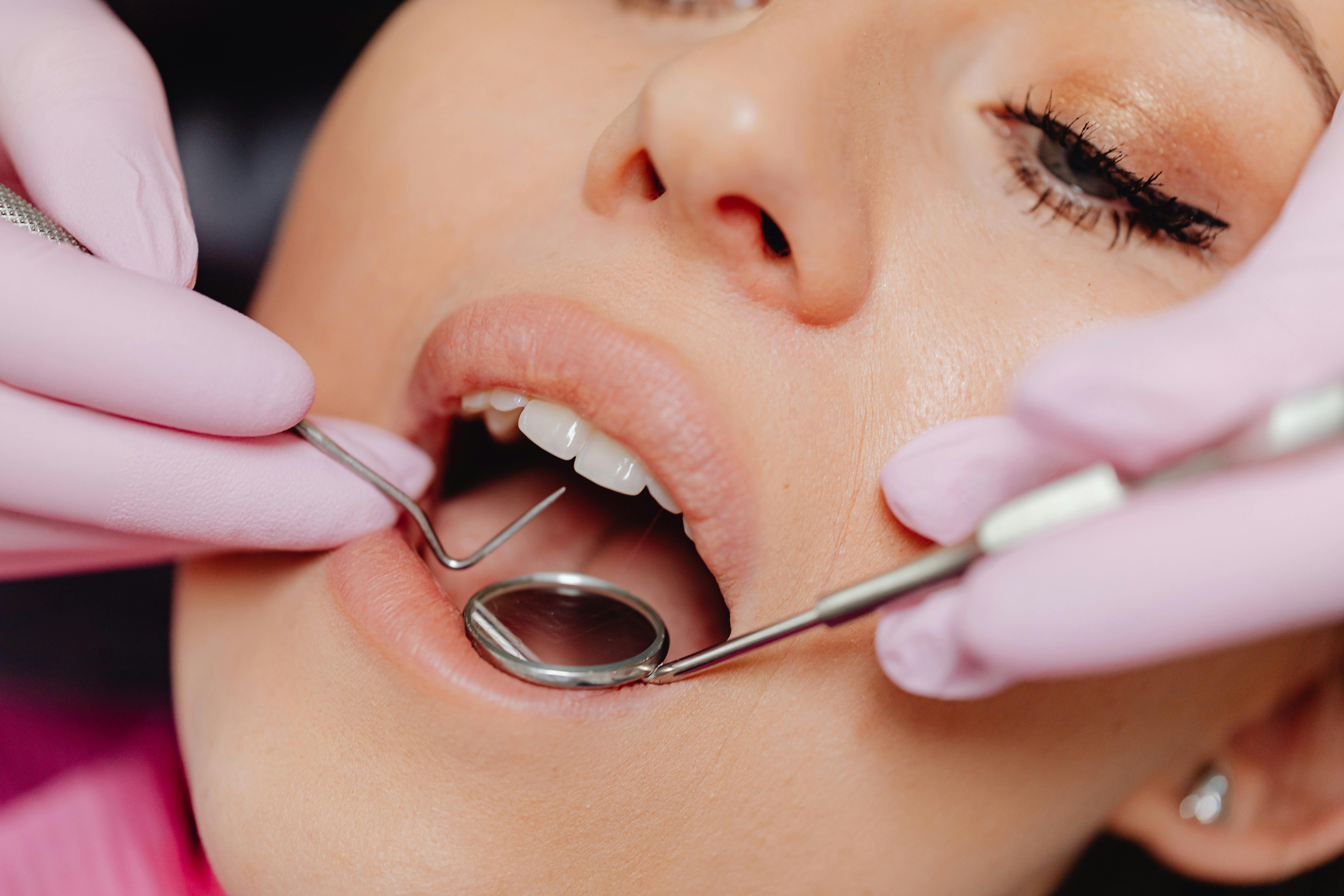
People who dislike how much gum shows when they smile are often looking at a proportion problem rather than a tooth problem. Gum contouring addresses the frame, not the picture.
The gum line sets apparent tooth length
A tooth's visible length is measured from the gum margin to the biting edge, so where the gum sits determines how long the tooth appears regardless of its true size.
Teeth that look short and square are sometimes full length, with the upper portion still covered by gum tissue that never receded during development.
Moving that margin upward exposes existing tooth structure. Nothing is added to the tooth, which is why the change can look dramatic while being conservative.
Bone position limits what is possible
Beneath the gum sits the bone that supports the tooth, and a consistent band of soft tissue attaches between the two. That attachment reforms at a set distance from bone.
If gum alone is trimmed without accounting for bone level, tissue tends to grow back toward its original position over the following months.
Where a lasting change is needed, a small amount of bone may have to be recontoured as well. That distinction is a clinical judgement, made from measurements and imaging.
Not every gummy smile has a gum cause
Some cases arise from an upper lip that lifts unusually high, some from the position of the upper jaw, and some from teeth that never fully erupted.
Each of those has a different route to treatment, and reshaping tissue would not resolve a case driven by lip movement or jaw position.
Working out which mechanism applies is the point of the assessment, and it is why identical looking smiles can receive quite different recommendations.
How the reshaping is carried out
Tissue can be removed with a scalpel, an electrosurgery tip or a soft tissue laser. The instrument affects bleeding and healing more than it affects the final contour.
Symmetry is planned before anything is removed, usually against the midline and the eye teeth, because the eye detects an uneven gum line quickly.
The reshaped margin needs weeks to mature, so any restorations that will sit against it are generally fitted after the tissue has settled.
Healing and what should be reported
Discomfort after tissue reshaping is usually modest and short lived, and the reshaped area passes through a tender phase before the surface toughens.
Bleeding that does not settle, spreading swelling, or pain that increases rather than fades are not part of ordinary healing and should be reported to the treating dentist.
Longer term, the stability of a contoured gum line depends heavily on plaque control, since inflamed tissue swells and undoes the shape that was created.