
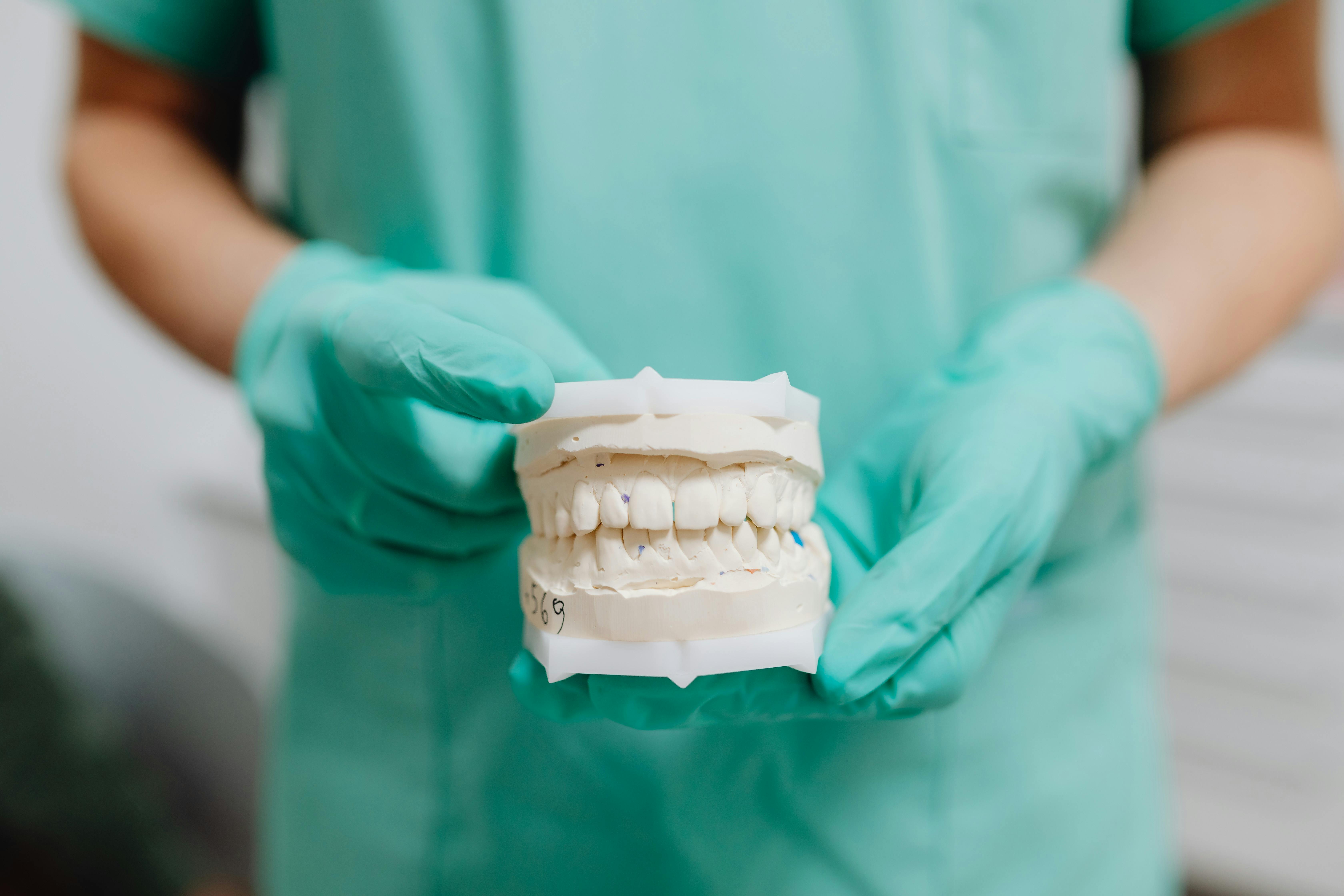
Two people can start orthodontic treatment with similar looking front teeth and finish months apart. The usual explanation is that one case involved the bite and the other did not.
Alignment and occlusion are different problems
Aligning teeth means arranging them evenly along their own arch. It is a matter of rotating and shifting individual teeth into a smooth curve.
Occlusion describes how the upper and lower arches meet each other. It is a relationship between two structures rather than a property of either one alone.
An arch can be perfectly aligned while meeting its opposing arch badly, which is why straight teeth alone do not indicate a corrected bite.
Front teeth respond faster than back teeth
Incisors have single, relatively narrow roots and comparatively little surface area anchoring them in bone, so they move readily under modest force.
Molars have multiple, broad roots and far greater anchorage. Shifting one meaningfully forward or back is a slower process requiring more force and more control.
Since bite correction usually means changing where the molars meet, the timeline is set by the slowest teeth in the mouth rather than the most visible ones.
Anchorage has to be created
Every force has an equal reaction, so pulling one group of teeth backward tends to pull another group forward unless something resists it.
Orthodontists manage this with elastics, appliances or small temporary anchorage devices placed in bone, each adding steps that pure alignment cases do not need.
Getting anchorage wrong shows up as unwanted movement elsewhere, which then has to be corrected, extending treatment further.
Skeletal differences may sit behind the bite
Some bite discrepancies are dental, with the jaws well related and only the teeth misplaced. Those can often be resolved by moving teeth alone.
Others reflect a difference in the size or position of the jaws themselves, and tooth movement can only camouflage rather than correct that.
Distinguishing between them requires imaging and measurement, and in growing patients the timing of treatment may be chosen to make use of remaining growth.
Settling the bite is its own phase
Once the arches are broadly correct, teeth still have to meet evenly across many contact points, and small vertical discrepancies are refined near the end.
This detailing phase looks like little is happening, since the outward appearance changed months earlier, but it determines how the bite functions and how stable it will be.
Ending treatment early because the front teeth look finished leaves that work undone, and it is one reason relapse follows some shortened cases.