
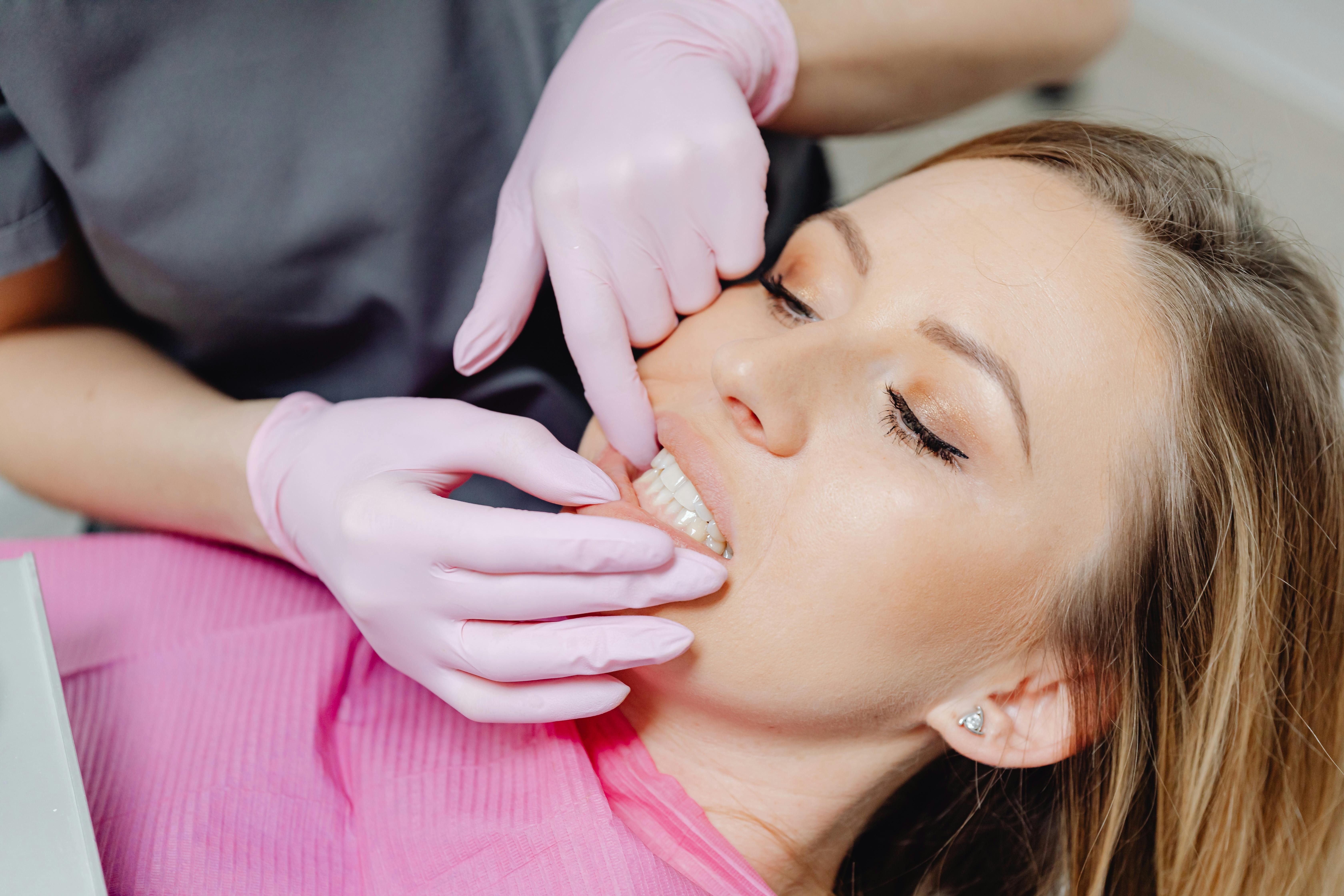
Sensitivity during whitening is common and usually passes within days of stopping. The reason involves what peroxide does after it has finished acting on the pigment.
Peroxide does not stop at the dentine
The molecules diffuse through enamel and dentine, and part of that dose reaches the pulp chamber where the nerve and blood supply sit.
Peroxide there produces a mild reversible inflammation in the pulp tissue, which lowers the threshold at which the nerve responds to stimuli.
Cold, sweetness and even air can then provoke a sharp sensation that the same tooth ignored before treatment began.
Fluid movement explains the sharpness
Dentine is threaded with tubules running from the pulp toward the outer surface, each containing fluid connected to nerve endings at the inner end.
Anything that causes rapid fluid movement in those tubules deforms the nerve endings and produces the characteristic brief, sharp pain.
Whitening temporarily increases tubule permeability, so stimuli that would have been buffered by the normal surface now generate more movement. The tubules themselves are unchanged; what alters is how readily anything travels along them.
The tooth also dehydrates during treatment
Enamel loses water during whitening, which is part of why teeth look dramatically lighter immediately afterward and then settle back over a day or two.
A dehydrated surface conducts stimuli differently, adding to the sensitivity felt in the hours following an application.
Rehydration occurs naturally from saliva over the following day or two, and both the exaggerated brightness and much of the sensitivity fade together. This is also why a shade assessed immediately after treatment overstates the lasting result.
Some mouths are more affected than others
Exposed root surfaces have no enamel covering, so peroxide contacts dentine directly and sensitivity is markedly greater where recession exists.
Cracks, worn biting surfaces, leaking restorations and untreated decay each provide a shorter route inward and can turn discomfort into genuine pain.
Existing sensitivity before treatment is a reason for assessment, since it often points to one of these findings rather than to a general susceptibility.
Why persistence changes the picture
Sensitivity that resolves within a few days of stopping fits the reversible pulpal response described above and is the expected pattern.
Pain that lingers, wakes a person at night, or is triggered by heat rather than cold does not fit that pattern and warrants examination.
Managing whitening sensitivity involves adjusting concentration, contact time or frequency, and those adjustments belong with the dentist supervising the treatment.